What is 4-ply yarn? (And why is it so confusing?)
If you’ve ever stood in a yarn shop holding two yarns both labelled 4-ply and wondered why they look completely different, you’re not imagining things. The term 4-ply is one of the most confusing in knitting – and there’s a good reason for that.
In this post:
- Where the term 4-ply comes from
- Why it’s so confusing today
- How ply structure affects how yarn behaves
- How to measure yarn thickness accurately
Where does the term 4-ply come from?
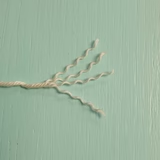
To understand 4-ply yarn, it helps to know how yarn is made. When fibre is spun, either by hand or by machine, the spinner creates individual strands. They then have a choice: use a single strand at the thickness they need, or create several thinner strands and twist them together. Twisting multiple strands together is called plying, and it makes the yarn stronger and more stable than a single strand of the same thickness.
Historically, spinners used strands of a standard thickness. A yarn made from four of those standard strands was called 4-ply. Two strands made 2-ply (lace weight), and ten strands made what we now call DK. This system worked well because the number of plies gave you a reliable indication of how thick the yarn would be.
So why is it confusing now?
The problem is that modern yarns are no longer made from standard-thickness strands. A yarn can be labelled 4-ply because it has four strands twisted together, but those four strands might be very fine or quite chunky, making the yarn different thicknesses. The number of plies no longer reliably tells you the thickness of the yarn.
To make things more complicated, 4-ply is also used as a synonym for fingering weight – a yarn thickness not a description of how many strands it actually contains. So when you see 4-ply on a label, it might mean the yarn has four plies, it might mean it’s fingering weight, or it might mean both.
This is why you can pick up two yarns both labelled 4-ply and find they knit up completely differently.
Does ply structure matter beyond thickness?
Yes, and this is where it gets interesting. The number of plies affects more than just thickness. A plied yarn behaves differently to a single-strand (singles) yarn of the same weight:
- Plied yarns are generally stronger and more durable
- They tend to have better stitch definition, making them good for cables, colourwork, and textured stitches
- Singles yarns have a softer, more fluid drape — better for shawls and garments where you want the fabric to flow
- Singles can be more prone to pilling but have a lovely halo in some fibres
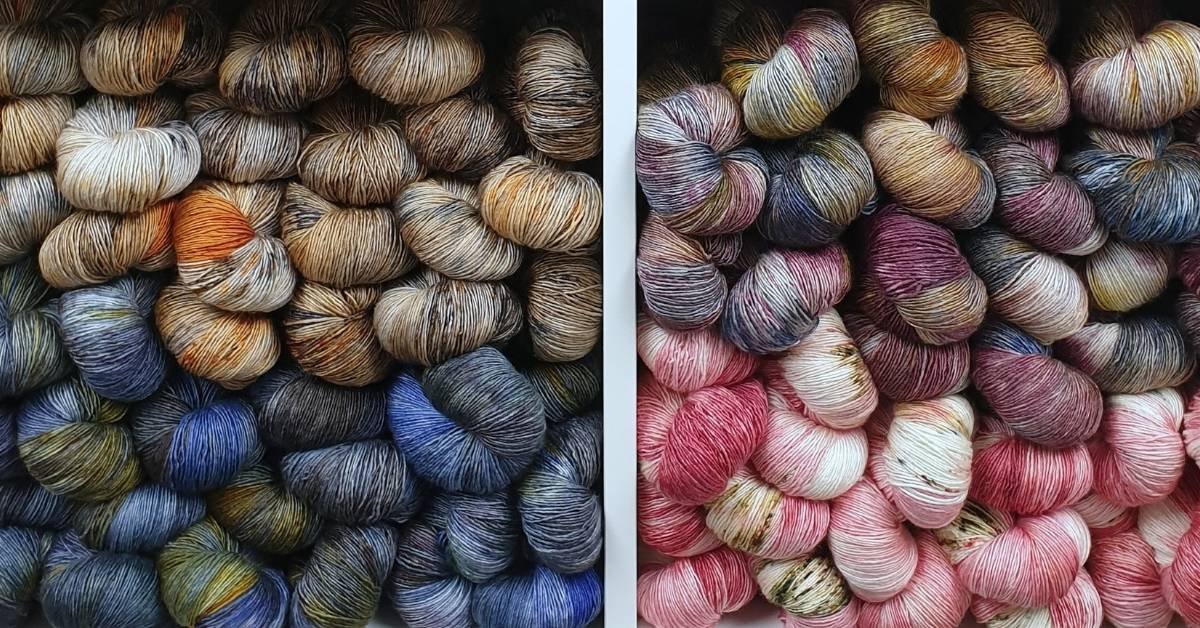
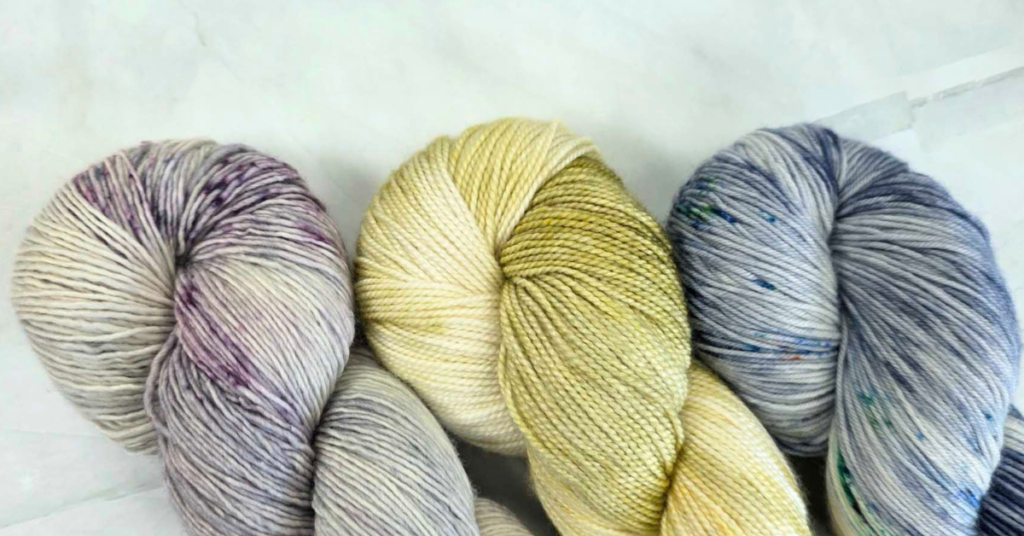
At Skein Queen, Wriggle and Selkino are both singles yarns at fingering weight. They behave very differently from a plied 4-ply base like Crush, even at the same weight. Understanding this difference is one of the things that helps you choose the right yarn for a project.
How do I know how thick a yarn actually is?
The most reliable way to measure yarn thickness is wraps per inch (WPI). To measure WPI:
- Take a knitting needle, ruler, or pencil
- Wrap your yarn snugly around it — not too tight, not too loose, strands lying next to each other without squashing
- Measure one inch and count how many wraps fit in that inch
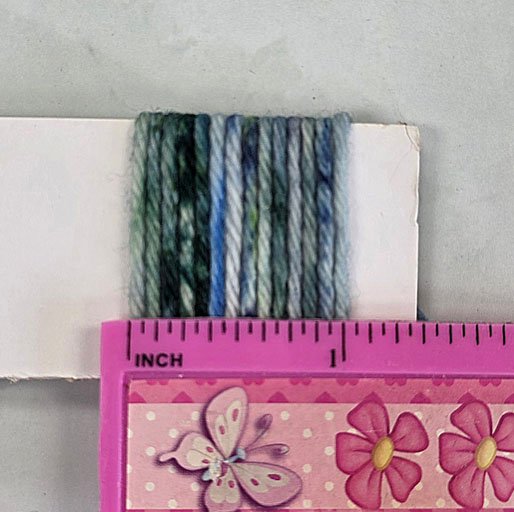
Here are the WPI ranges for common yarn weights:
- Lace weight — 35+ wraps per inch
- Fingering weight (4-ply) — 19–22 wraps per inch
- Sport weight — 15–18 wraps per inch
- DK weight — 12–14 wraps per inch
- Worsted — 9–11 wraps per inch
- Bulky — 7–8 wraps per inch
- Super bulky — 6 or fewer wraps per inch
One thing to note: WPI is harder to measure accurately with very fluffy or halo yarns, as it’s difficult to wrap them consistently. For those yarns, the meterage per 100g is often a more reliable guide.
What about metres per 100g?
Meterage (or yardage) per 100g is another reliable guide to yarn thickness. The more metres you get per 100g, the finer the yarn. Rough guides:
- Lace weight — 700m+ per 100g
- Fingering weight — 350–500m per 100g
- Sport weight — 250–350m per 100g
- DK weight — 200–250m per 100g
- Worsted — 150–200m per 100g
- Bulky — 100–150m per 100g
This is why checking the meterage on a yarn label is always a good idea — it tells you far more than the weight name alone.
TL;DR – The short version
4-ply on a yarn label can mean two things: the yarn has four plies (strands twisted together), or the yarn is fingering weight. Sometimes it means both, sometimes just one. The number of plies also affects how the yarn behaves, not just how thick it is. When in doubt, check the WPI or the meterage per 100g for a more reliable guide to thickness.
Frequently Asked Questions
A: 4-ply can mean two things. It can describe a yarn made from four twisted strands, or it can be used as another name for fingering weight yarn. Sometimes it means both, which is why it can be confusing.
A: Not always. 4-ply is often used as a synonym for fingering weight, but technically it describes the structure of the yarn rather than the thickness. The most reliable way to check thickness is to measure wraps per inch or check the meterage per 100g.
A: DK yarn is thicker than 4-ply. A fingering weight 4-ply yarn typically gives 19-22 wraps per inch and around 350-500 metres per 100g. DK gives 12-14 wraps per inch and around 200-250 metres per 100g.
A: Yes. Plied yarns tend to have better stitch definition and durability than singles yarns of the same weight. Singles yarns have more drape and a softer feel but can be more prone to pilling.
A: Wrap the yarn snugly around a knitting needle or ruler and count how many wraps fit in one inch. This is called wraps per inch or WPI. Fingering weight yarn measures 19-22 WPI. You can also check the meterage per 100g — fingering weight typically gives 350-500 metres per 100g.
Want to learn more about what makes yarns different? Yarn Adventure is all about understanding the why behind yarn. Browse the Yarn Adventure blog for more.